

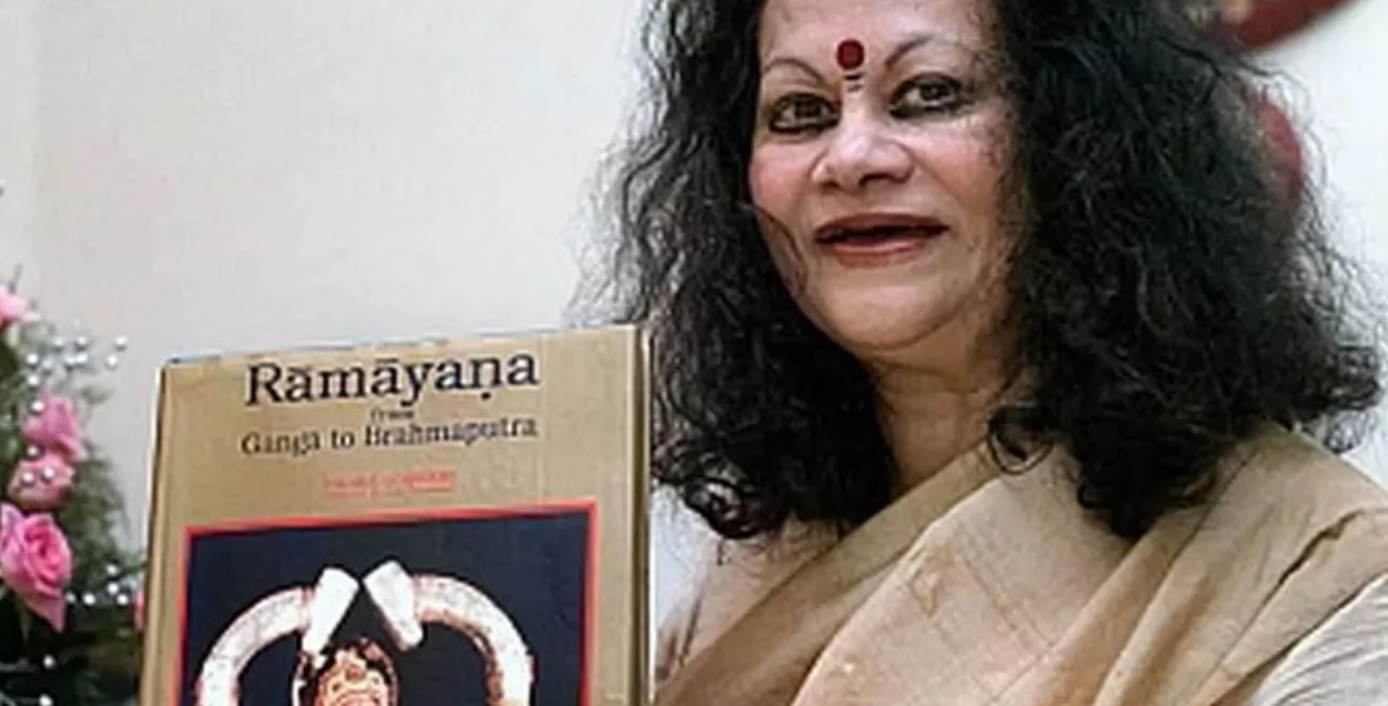
The Jnanpith Award is a prestigious literary honor of India that is presented every calendar year by Jnanpith Foundation to the great literary contributions. The award recognizes those who’ve helped to develop Indian writing in multiple languages that are listed as Schedule-8 languages under the Constitution. The award was first presented in 2000 awarded by Mamoni Raisom Goswami (also Indira Goswami) in honor of her exceptional literary works.
About Mamoni Raisom Goswami
Active Assamese writer, professor and scholar, Mamoni Raisom Goswami died in the year 2011). She was well-known due to her honesty and social consciousness, and her work dealt with sensitive subjects like caste, gender as well as insurgency and human sufferings. Daughter of Assam she was given by the Jnanpith Award making her the third Assamese writer to be awarded this award, further cementing her position among the top and most prominent writers of contemporary India.
Jnanpith Award 2000 – For Which Work?
The Jnanpith Award 2000 was not connected to a single novel, but to her total work in Indian literature. The most well-known novel may be the work that is referred to as must-powerful of her work The Moth-Eaten Howdah of the Tusker (Dontal Hatir Une Khowa Howdah). The novel examines the problem of Assamese widows and the way they are afflicted by the stifling customs.
Notable Works of Mamoni Raisom Goswami
Her most important work includes:
Moth-Eaten Howdah of the Tusker (Dontal Hatir Une Khowa Howdah)
- The Splattered Pages (The Delhi University riots story)
- The Man of Chinnamasta (social criticism and reform of the religion)
- Dasharathir Khoj (the search of social justice)
These writings were a mixture of social commentary and strong narration, making her one of the most admired writers of the time.
Impact of the Recognition
The success of bringing an award named the Jnanpith Award 2000 into Mamoni Raisom Goswami made her a prominent stage on the international and national level. It affirmed her as a fervent champion of the marginalized groups and as a forward-thinking writer that challenged customs of the past. The award also brought attention on Assamese literature to a larger audience, making her work accessible to wider audiences.
Legacy of Mamoni Raisom Goswami
Mamoni Raisom Goswami’s legacy Mamoni Raisom Goswami was not just a work of literary mastery, but also an activist in the social sphere too. She committed her short stories, and academic work to resolving some of the most complex political and social issues in India. Her work is not able to match the current trends of the time however they influence a different generation of authors, researchers and social reformers.
FAQs
Q1. mamoni raisom goswami award to which novel?
Ans The answer is that it was her overall literary contribution that won her the Jnanpith Award in 2000 and it was not for a particular work. Her award is usually associated by The Moth-Eaten Howdah of the Tusker.
Q2. What is the language she wrote in?
The answer is that she was writing in the Assamese language. However, the majority of her writing has been translated into the English language as well as other.
Q3. Is she one of the first Assamese novelist to win the Jnanpith Award?
Ans: No. She was the third Assamese and was the very first Assamese woman to be awarded the award.
Q4. What are the main themes of her work?
Ans Her writings addressed the subject of gender inequalities as well as caste oppression, widowhood, insurgency, and human sufferings.